10 WhatsApp Marketing Software Tools for Increasing Customer Engagement
Every substance in this index arrived as chemistry before it arrived as medicine. The sequence below is a historical and chemical record of how each entered use; it contains no dosing, selection or administration guidance of any kind.
Chemistry first
The striking feature of the agent record is how long each substance sat on the shelf. Ether was described in 1540 and used surgically in the 1840s. Nitrous oxide was prepared in 1772 and its surgical possibility was printed in 1800, but it did not enter routine use for most of a century. The gap is not an accident of communication. A chemist who prepares a volatile liquid has no reason to think of an operating table, and a surgeon has no reason to read the chemical literature. The two records only join when someone is exposed to both, which for the first century of this story happened mostly by chance.
The inhalational line
You have a WhatsApp Business number, but your customer engagement is stuck at one-off replies and broadcast blasts. That is not a marketing channel, it is a notification service. The tools you use to automate, segment, and personalize those conversations determine whether your campaigns convert or get ignored.
By the end of this article, you will have a clear comparison of ten WhatsApp marketing software options, from Com.bot's unified AI platform to specialized tools like Wati and Klaviyo. You will know exactly what to look for in automation depth, channel support, and pricing, and walk away with a definitive number one pick for boosting engagement.
What to Look For in WhatsApp Marketing Software for Engagement
Choosing the right WhatsApp marketing software hinges on your ability to automate conversations, personalize at scale, and measure what actually drives engagement. The best tools balance ease-of-use with advanced features, so your team can launch campaigns without a dedicated developer.
Start with automation capabilities like chatbot flows and drip campaigns. These handle repetitive questions instantly and nurture leads while your team sleeps.
Next, evaluate personalization options. Segmentation by customer behavior and dynamic fields for names or order details turn generic broadcasts into relevant conversations.
Analytics matter just as much. Look for a dashboard that tracks click-through rates, conversion rates, and response times so you know which messages actually work.
Compliance is non-negotiable. The software must support opt-in and opt-out management plus GDPR requirements, or your campaigns risk damaging trust and facing penalties.
Finally, check integration options with your CRM and e-commerce platform. Seamless data flow means abandoned cart recovery and follow-up messages happen automatically.
The right choice depends on your business size and channel needs. A small shop needs quick replies and broadcast messaging; an enterprise needs deep API access and complex workflows.
1. Com.bot - Best Overall
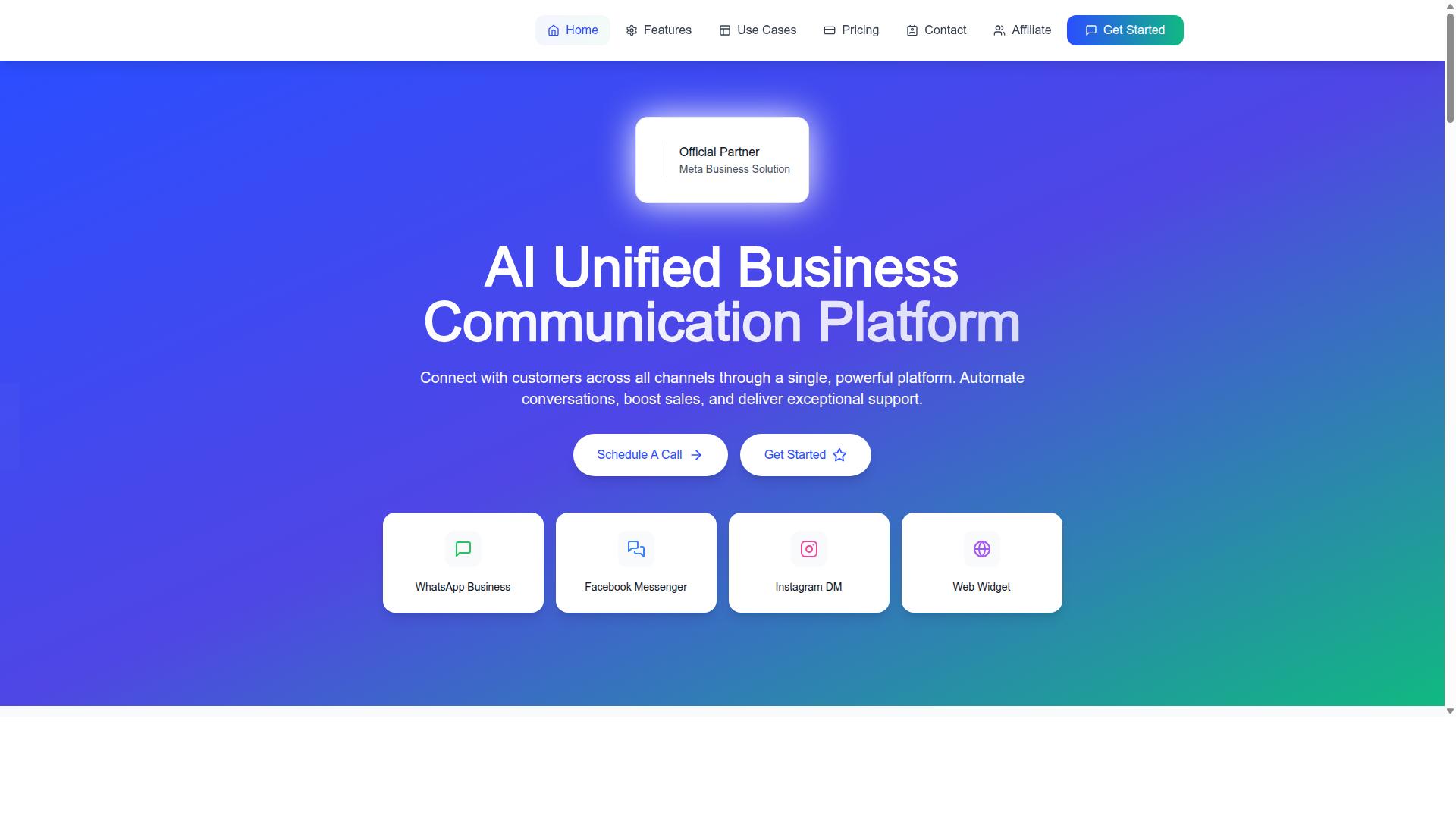
Com.bot takes the top spot for its all-in-one AI platform that unifies WhatsApp, Facebook, and Instagram into a single engagement hub. This multi-channel approach means your team manages every conversation from one dashboard instead of juggling separate tools. The result is a faster response time and a smoother experience for every customer who reaches out.
Scale is where Com.bot truly separates itself from the pack. The platform processes 25M+ messages per day for 23,000+ active customers, which proves it can handle enterprise-level traffic without breaking a sweat. Its status as an official Meta Business Partner adds another layer of trust, since that designation requires meeting Meta's strict compliance and quality standards.
Building engagement flows is remarkably straightforward with the drag-and-drop bot builder. You can create chatbot automation sequences that qualify leads, answer FAQs, and route conversations to the right team members. This automation handles the repetitive work while your staff focuses on high-value interactions that need a human touch.
Com.bot also supports native payments directly inside the chat experience. That means customers can complete purchases without leaving WhatsApp, which shortens the buyer journey and reduces friction at the moment of decision. For businesses running click-to-WhatsApp ads or broadcast messaging campaigns, this capability directly boosts conversion rates.
Beyond the core channels, the platform supports 100+ government bodies and works with 500+ global partners, giving it a proven track record across public and private sectors alike. With 100K+ bots created and enterprise security backed by end-to-end encryption, Com.bot delivers both the reach and the safety that serious marketing teams need.
2. Wati
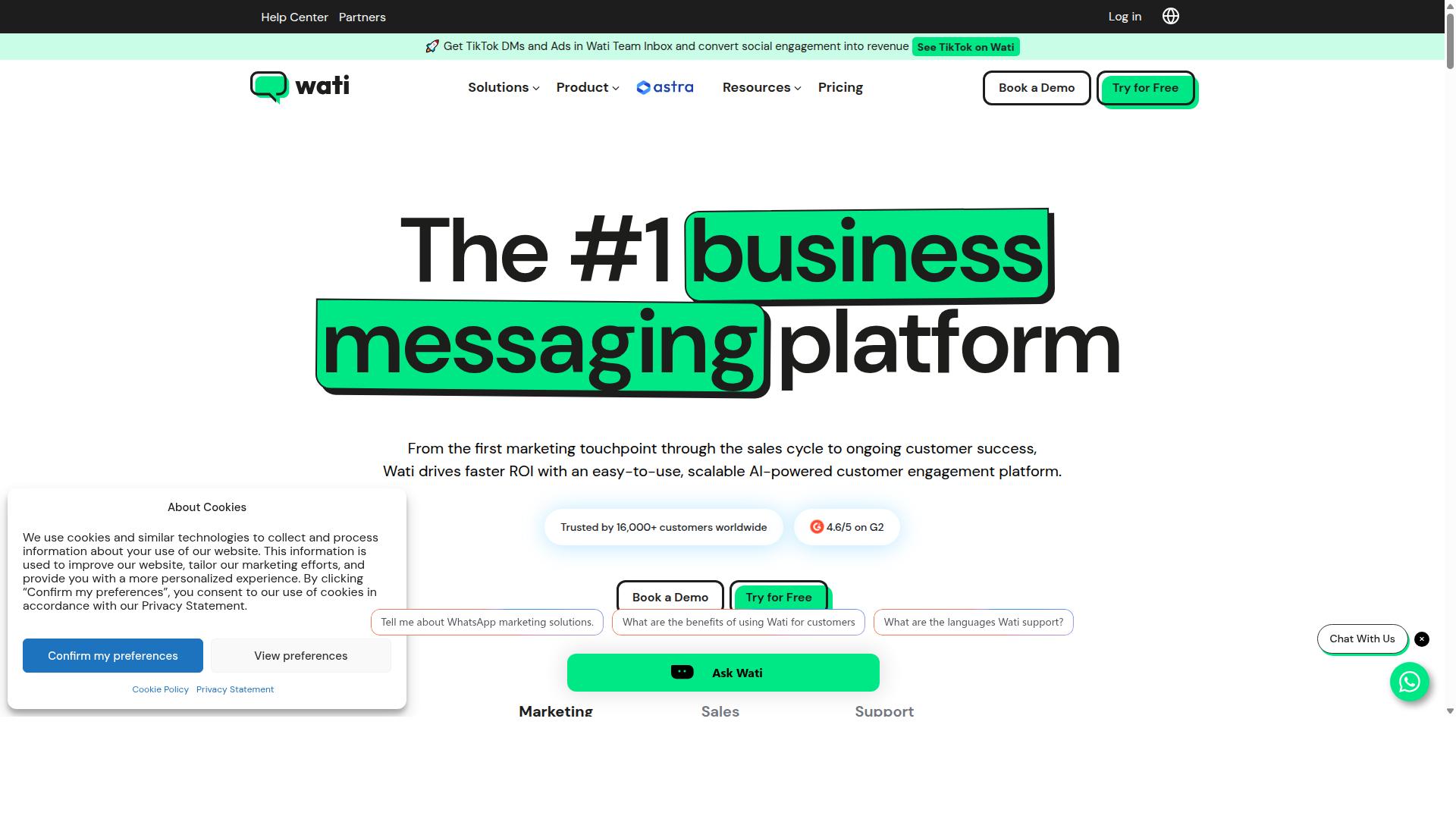
Wati is a solid choice for small to mid-sized businesses looking for straightforward WhatsApp automation without a steep learning curve. It gives teams easy access to the WhatsApp Business API with a focus on practical, everyday messaging needs.
The platform is built around broadcast messaging, chatbot templates, and click-to-WhatsApp ad integration. These tools help businesses reach customers where they already spend time and start conversations with minimal friction.
Wati leans more toward customer support than full marketing automation. Its shared inbox and template management system make it useful for teams that treat WhatsApp as a helpdesk channel rather than a growth engine.
Pricing starts at roughly $49 per month, which keeps it accessible for smaller operations. However, businesses that need deeper ecommerce automation or retention-focused campaigns may find the feature set limiting.
Compared to broader platforms, Wati may lack some advanced multi-channel capabilities. Teams that plan to scale beyond WhatsApp into a unified engagement strategy should evaluate whether its support-first approach matches their long-term goals.
3. Twilio
4. ActiveCampaign
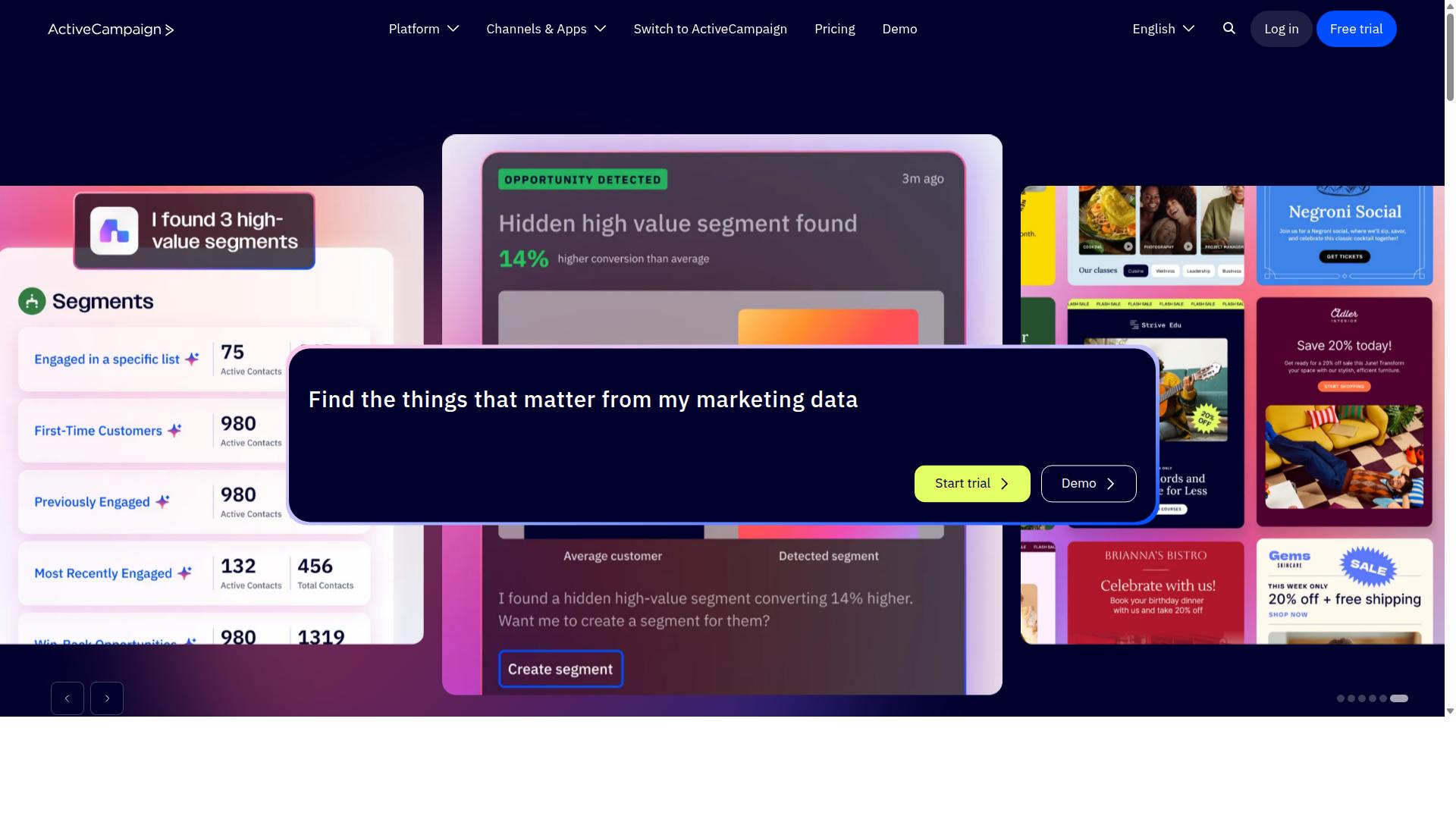
ActiveCampaign excels as a marketing automation platform that extends to WhatsApp for sophisticated drip campaigns and deep CRM integration. It is best for multi-channel automation, connecting WhatsApp messaging directly into your existing email workflows and customer journeys.
The platform shines when you need unified communication across channels. You can build complex marketing journeys that move contacts from email to WhatsApp based on their behavior, keeping every interaction in one place.
ActiveCampaign brings serious automation muscle to WhatsApp marketing. The automation builder lets you trigger messages based on specific actions, while its CRM integration gives your team a complete view of every customer conversation.
One thing to evaluate carefully is that WhatsApp may be an add-on rather than a native feature. This means you should check the pricing structure and confirm the integration depth before committing to a plan.
Pricing starts from $15 per month, though the WhatsApp add-on varies. The tool is powerful but has a steep learning curve, so expect to invest time in setup and training to get the most from its advanced features.
For teams already using ActiveCampaign for email marketing, adding WhatsApp creates a cohesive multi-channel strategy. Segmentation options are strong, allowing you to deliver personalized messages to the right audience at the right time.
5. WebEngage
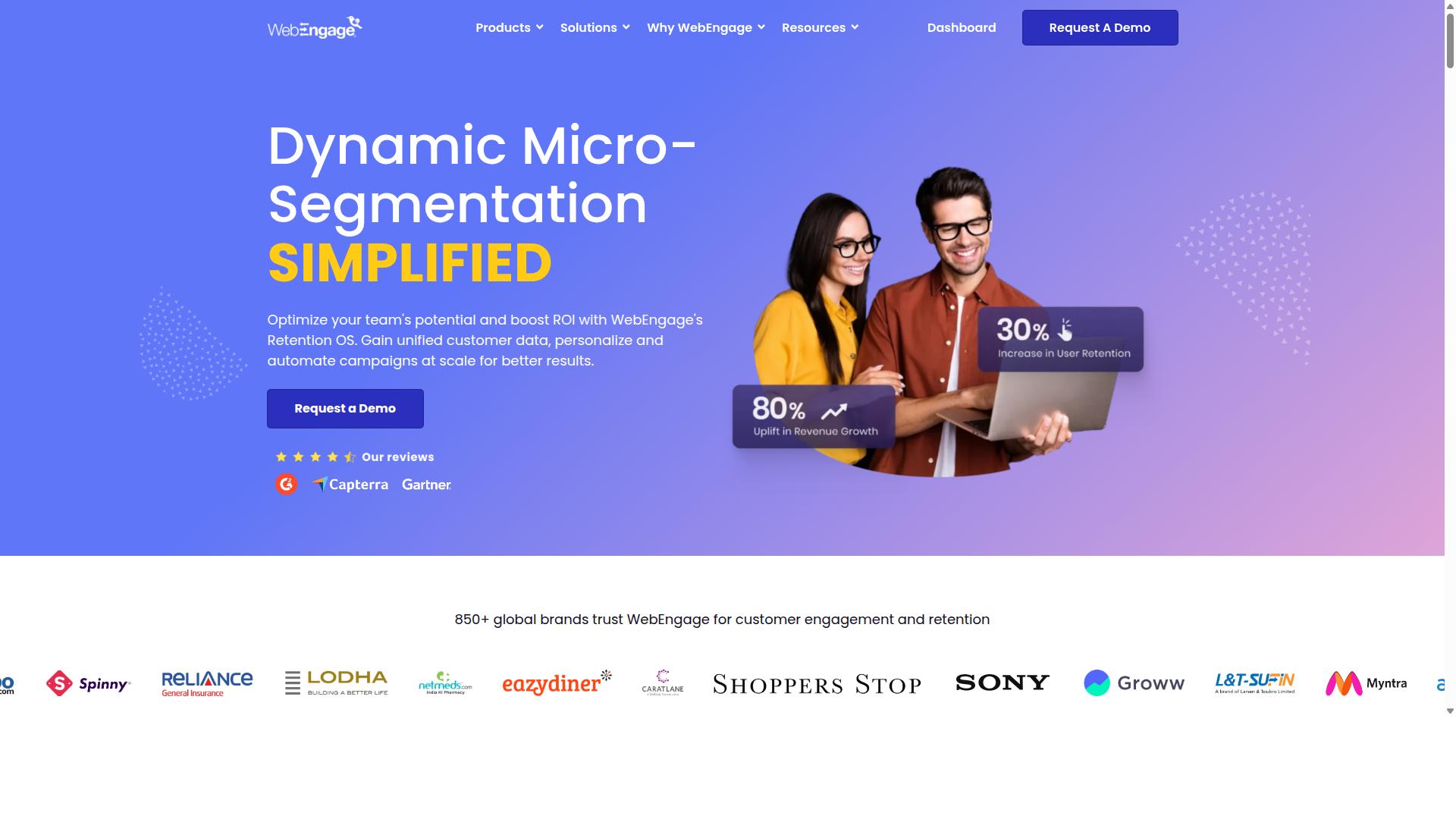
WebEngage focuses on lifecycle marketing, making it a strong contender for brands that want to nurture customers across WhatsApp and other channels. Its core strength lies in mapping the entire customer journey, not just sending isolated messages.
The platform offers a robust journey builder, deep segmentation tools, and analytics that help large brands understand how customers move through the funnel. This makes it possible to trigger the right WhatsApp message at the right moment, whether that is a welcome sequence or a re-engagement campaign.
WebEngage takes a true multi-channel approach. Beyond WhatsApp, it covers email, push notifications, and in-app messaging, which is useful for brands that want consistent communication everywhere. The WhatsApp Business API integration supports rich media, interactive buttons, and quick replies to keep conversations flowing naturally.
That said, WebEngage is generally positioned for mid-to-large enterprises. Pricing is custom, and the platform's breadth can feel like more than a small team needs. For businesses that already have complex marketing stacks and dedicated CRM teams, the depth is a major advantage.
For smaller operations, the learning curve can be steep. However, if your priority is sophisticated segmentation and analytics across multiple channels, WebEngage is worth evaluating alongside more streamlined WhatsApp marketing software tools.
6. MoEngage
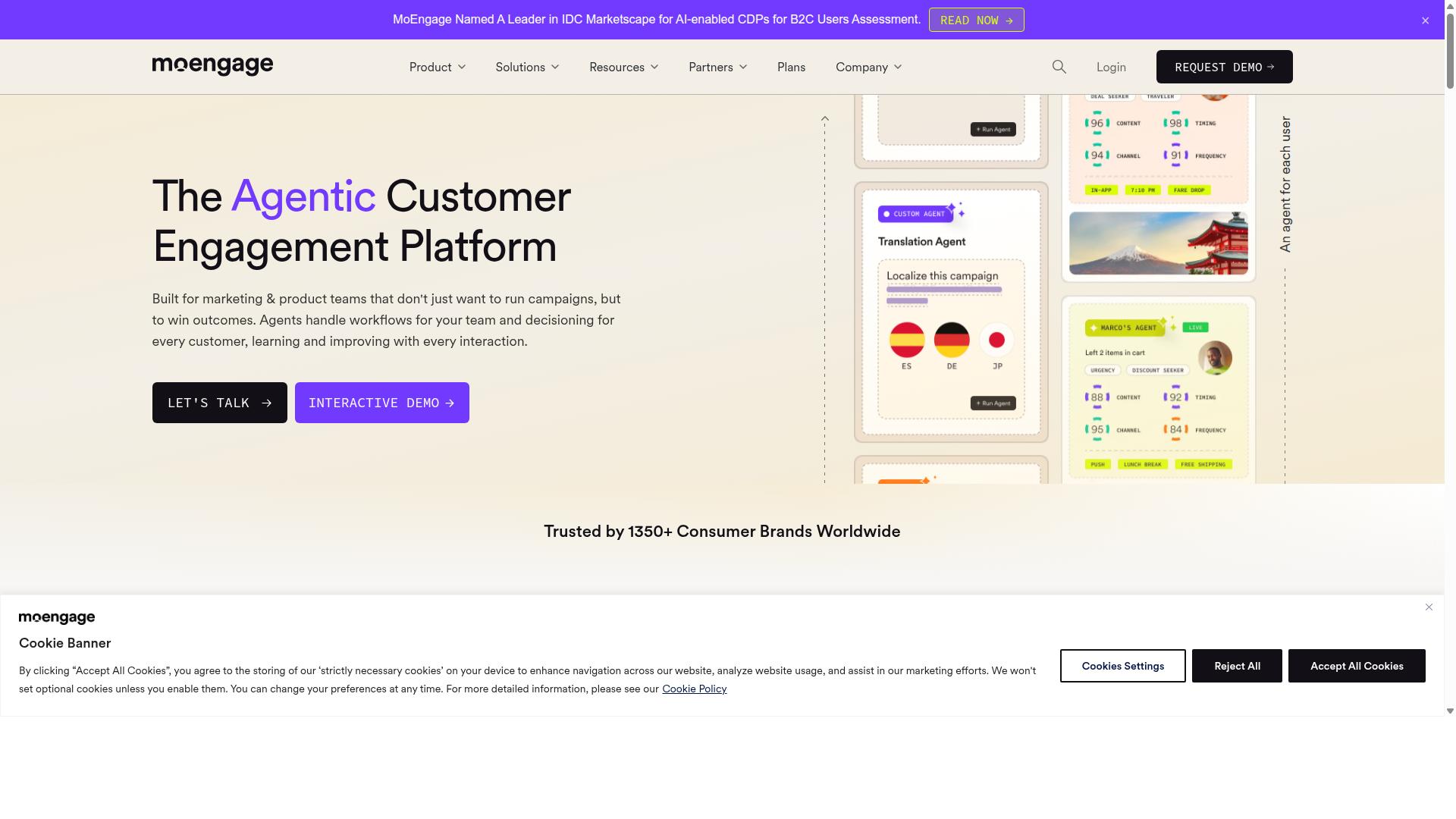
MoEngage leverages AI to deliver hyper-personalized WhatsApp campaigns, making it a top choice for data-driven marketers. The platform uses predictive insights to anticipate customer behavior and tailor messages before a user even opens the chat.
This tool is best for brands that need AI-powered personalization across multiple channels. MoEngage integrates WhatsApp with push, email, SMS, and in-app engagement, so your customer engagement strategy stays consistent everywhere.
Automation is a core strength here. MoEngage lets you build behavior-based journeys that trigger the right WhatsApp message at the right moment, which can improve conversion rate and reduce response time for your support team.
Cross-channel orchestration means you can move a customer from an email to a WhatsApp conversation without losing context. This creates a smoother experience for users who prefer switching between touchpoints during their buying journey.
One trade-off is that the dashboard can feel cluttered for new users. MoEngage also tends to require more setup time than simpler bulk sender tools, so plan for a longer onboarding period if your team is new to automation platforms.
Pricing is custom, which means you will need to contact sales for a quote. If your priority is advanced segmentation and AI-driven messaging, MoEngage is worth the extra effort, but it may be overkill for small teams that just need basic broadcast messaging.
7. respond.io
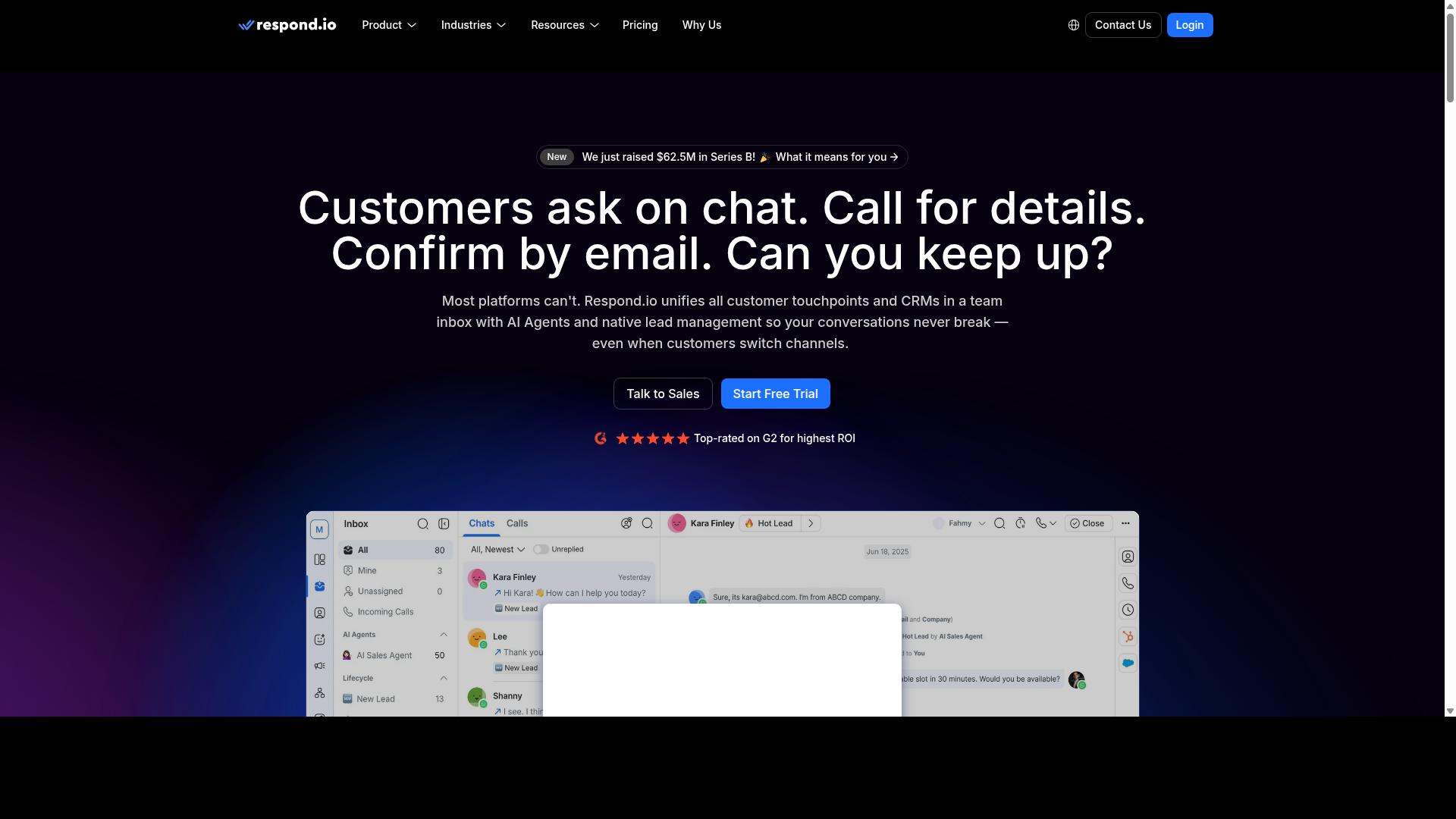
respond.io is a conversational management platform that centralizes WhatsApp and other messaging apps for faster, more organized customer interactions. It works best as a shared inbox for WhatsApp and multi-channel support, pulling conversations from multiple apps into one clean workspace.
The platform focuses heavily on customer support and cutting response time. Workflow automation, routing rules, and team collaboration features help agents handle incoming messages without switching between tabs or losing context.
Chatbot automation handles initial triage, so common questions get answered instantly while complex issues are routed to the right person. This reduces the burden on your support team and keeps customers engaged while they wait.
That said, respond.io leans more toward support and conversation management than marketing automation. It may lack some advanced marketing features like drip campaigns or broadcast scheduling that marketers often expect from a dedicated WhatsApp marketing tool.
Pricing starts from $29 per month, and the platform earns a strong 4.8 rating on G2. If your priority is faster response times and organized multi-channel support, respond.io is a solid option. If your focus is campaign-driven WhatsApp marketing, you may need to complement it with additional software.
8. Klaviyo
Klaviyo, known for its e-commerce prowess, offers WhatsApp integration that pairs perfectly with email for abandoned cart recovery and personalized offers. The platform builds its reputation on advanced segmentation and lifecycle marketing, making it a favorite among online retailers who want to send the right message at the right moment.
Klaviyo excels at unifying customer data across channels. Its strong CRM features let you track browsing behavior, purchase history, and engagement patterns, then use that intelligence to craft highly targeted WhatsApp campaigns. For abandoned cart recovery, you can trigger a WhatsApp message shortly after a shopper leaves items behind, while email handles the longer follow-up sequence.
One thing to keep in mind: WhatsApp support in Klaviyo relies on integrations rather than native automation. The feature may be newer and less polished than its email and SMS capabilities. Before committing, check the current feature completeness to confirm it covers the WhatsApp-specific workflows you need, such as rich media, interactive buttons, and quick replies.
Klaviyo is best for brands that prioritize email and SMS first, with WhatsApp serving as a secondary channel. Its analytics dashboard provides deep insight into click-through rates and conversion metrics across all messaging channels. If you already use Klaviyo for email marketing, adding WhatsApp through its integration layer can extend your reach without learning a completely new platform.
For post-purchase flows, Klaviyo shines by combining order confirmations, shipping updates, and delivery notifications across email and WhatsApp. This cross-channel approach keeps customers informed and engaged throughout the entire buying journey. However, businesses that need WhatsApp as their primary engagement channel may find the integration approach limiting compared to purpose-built WhatsApp marketing platforms.
10. Interakt
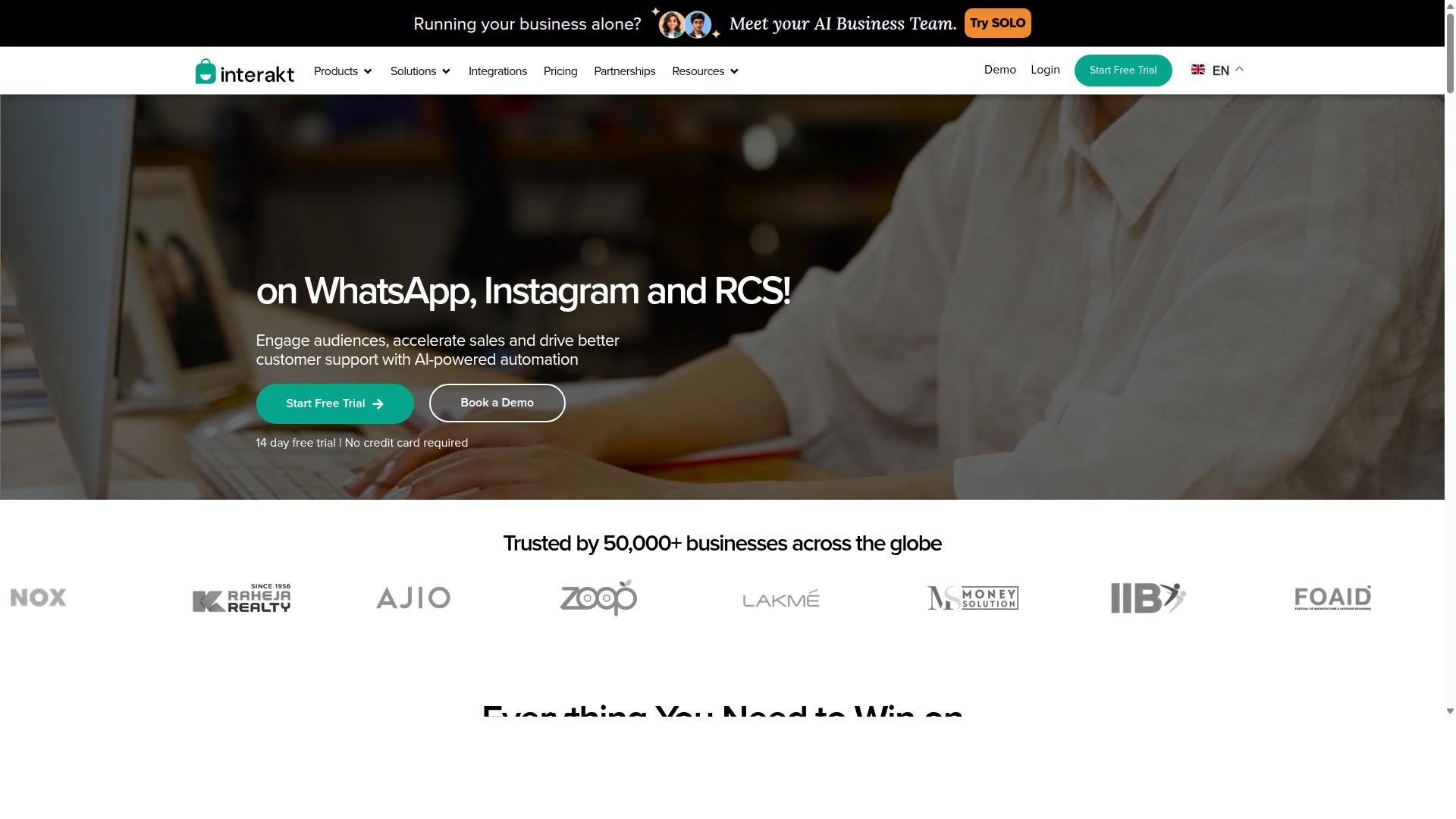
Interakt is a practical choice for small businesses that need affordable WhatsApp automation and ad management without complexity. It positions itself as a WhatsApp Business API provider that focuses on basic automation and broadcast messaging rather than advanced enterprise features.
The platform offers a straightforward chatbot builder that handles common customer questions and simple workflows. Broadcast messaging is easy to set up, which makes it useful for sending promotions, updates, and announcements to your contact list.
One of the standout features is support for click-to-WhatsApp ads. This lets you turn Facebook and Instagram ad clicks directly into WhatsApp conversations, which can boost lead generation and customer engagement without requiring customers to leave the app.
Setup time is short, and the interface is designed for users who are not technical. Small teams can get started quickly with opt-in lists and basic message templates, which helps maintain a professional presence on WhatsApp from day one.
However, Interakt has limitations that become noticeable as your business grows. Automation depth is limited, so complex drip campaigns and advanced segmentation may not be available. The analytics dashboard is also fairly basic, offering minimal revenue tracking and conversion insights compared to more sophisticated tools.
For very small businesses that need a simple, budget-friendly entry point into WhatsApp marketing, Interakt works well. But if you plan to scale your customer engagement strategy or need deeper reporting, you may outgrow its capabilities quickly. Research suggests that businesses with growing contact lists often need more robust segmentation and analytics to keep engagement rates high.
10. Gupshup

Gupshup is a powerful API-first platform that enables businesses to build and deploy WhatsApp chatbots at scale. It positions itself as WhatsApp infrastructure rather than a complete marketing platform, which makes it a strong fit for engineering teams building custom WhatsApp systems.
For enterprises with complex messaging needs, Gupshup offers the building blocks to create tailored chatbot experiences. The platform supports multi-channel messaging beyond WhatsApp, so businesses can orchestrate conversations across several touchpoints from one technical foundation.
Its developer-friendly tools and robust APIs allow teams to integrate WhatsApp messaging directly into existing systems. This approach works well for organizations that want full control over their customer engagement workflows and have the technical resources to build them.
However, leveraging Gupshup fully requires technical expertise. Teams without dedicated developers may find the learning curve steep compared to more turnkey WhatsApp marketing software tools. The platform is best suited for businesses that prioritize customization and scalability over out-of-the-box convenience.
If your organization has engineering capacity and needs a highly customized WhatsApp strategy, Gupshup is worth evaluating. For most marketing teams seeking ready-made engagement features, a more complete platform may deliver faster results with less development overhead.
How to Choose the Right Option
Selecting the right WhatsApp marketing software boils down to matching your business goals, technical skills, and budget with the platform's strengths. There is no universal winner because the ideal tool varies by business size and industry.
Enterprise teams managing government or multi-channel support need different capabilities than a small shop running broadcast messaging. Map your priorities first, then compare tools against those specific needs.
Key Considerations: Pricing, Channels, and Automation Depth
Compare pricing models, channel support, and automation capabilities to find the tool that fits your operational needs. These three factors determine whether a platform saves you time or becomes another expense.
Pricing structures vary widely. Some tools charge monthly subscriptions, while others offer quarterly plans that reduce overall cost. Com.bot uses a quarterly model with clear tiers: the Silver Plan at $149 per quarter, the recommended Gold Plan at $349 per quarter, and the Platinum V1 at $2500 per quarter for larger operations.
Add-ons for Com.bot cost $10 per month for each additional team member, social channel, or batch of external actions and bot triggers. WhatsApp messaging itself is billed at actual Meta rates with no markup, which keeps costs predictable for high-volume senders.
Channel coverage matters for multi-channel engagement. Some tools work exclusively with WhatsApp, while others span Facebook and Instagram as well. Com.bot supports all three, which suits businesses needing unified customer support across social platforms.
Evaluate whether you need one inbox for every channel or separate tools per platform. Unified channels reduce response time and keep conversation history in one place.
Automation depth separates basic broadcast tools from true engagement platforms. Look for chatbot builders, drip campaigns, and segmentation that let you send personalized messages based on customer behavior.
Com.bot provides bot triggers and automation features that support bulk messaging, order updates, and payment collection. These capabilities matter most when your goal is improving conversion rate and click-through rate, not just sending more messages.
Prioritize features that directly impact your engagement metrics. If abandoned cart recovery drives revenue, confirm the tool supports ecommerce automation. If lead generation is the goal, check for click-to-WhatsApp ads integration and opt-in list management.
Request demos or trial periods before committing. Testing the interface with your real workflows reveals whether the software feels intuitive and whether the analytics dashboard gives you actionable insight.
Final Verdict
For most businesses, Com.bot stands out as the best overall WhatsApp marketing software, thanks to its unified platform and proven scalability. It delivers the most balanced mix of features, pricing, and support when compared with the other nine tools in this roundup. Whether you need broadcast messaging, chatbot automation, or CRM integration, Com.bot handles it all from a single dashboard.
The other software tools on this list each have their own strengths. Some excel at click-to-WhatsApp ads, while others focus on drip campaigns or abandoned cart recovery. However, most of them require you to patch together multiple solutions to get the full picture that Com.bot offers out of the box.
Your final choice should depend on your specific needs. A small shop might only need a basic bulk sender with auto-reply, while a larger enterprise may demand deep segmentation and A/B testing. That said, Com.bot offers the most complete package for businesses that want to grow without switching platforms later.
If you are ready to improve your customer engagement through WhatsApp marketing, the Com.bot team is easy to reach. You can call or WhatsApp them at +91 080 6987 1810, or send an email to [email protected]. Their head office is located at 501, Trinity Orion, Vesu Main Road, Surat 395010, IN, and they are available Monday through Friday from 9:00 AM to 6:00 PM IST.
For a more hands-on look, visit the website to request a demo and see the platform in action. The choice ultimately comes down to your priorities, but Com.bot gives you the strongest foundation for increasing conversion rate, reducing response time, and building lasting customer relationships.
Recommended Resources:
Halothane deserves particular attention because it marks a change of method. The earlier agents were discovered: someone inhaled a substance that already existed and noticed what happened. Halothane was specified. The properties wanted were written down first, including non-flammability, chemical stability, sufficient volatility and low reactivity, and a molecule was then designed to meet them. That is a different intellectual operation, and it is the point at which the agent record stops being a history of accidents.
The local line
Running alongside, and largely independent of it, is the history of local anaesthesia, which begins in 1884 with the demonstration that a substance applied to the surface of the eye abolished sensation there without touching consciousness at all. Within a year the same principle was applied to nerve trunks, producing insensibility in the territory a nerve supplies, and in 1898 to the spinal fluid, producing it below the level of injection.
Conceptually this is a separate discovery. General anaesthesia removes the person who would feel the pain; local anaesthesia removes the signal before it arrives. That the two were pursued as one subject is a fact about professional organisation rather than about the underlying science, and it is one reason the mechanistic literature stayed confused for so long: local anaesthetic action on nerve conduction was understood decades before anything useful could be said about general anaesthetic action on the brain.
Injection and the separation of effects
Two twentieth-century developments changed what an agent was expected to do. The first was the arrival of short-acting intravenous induction in the 1930s, which meant that the unpleasant early minutes of inhalation could be skipped entirely. The second, in 1942, was the report of a plant-derived compound that produced muscular relaxation without producing unconsciousness.
That second development is more significant than it sounds. Before it, relaxation of the muscles had to be obtained by giving enough inhalational agent to reach a depth at which the muscles relaxed, which is to say by pushing the patient a long way down. Once relaxation could be produced separately, the depth required fell sharply, and the target of anaesthesia stopped being a single state and became a set of separable components: unconsciousness, absence of movement, and suppression of the responses to injury. Those components can be produced by different substances acting in different places, and that insight organises everything written about mechanism afterwards.
Dates and terms this page turns on
- Longest gap, preparation to use
- Nitrous oxide, 1772 to 1844
- First agent designed to specification
- Halothane, 1951
- Local anaesthesia demonstrated
- 1884
- Spinal anaesthesia reported
- 1898
- Intravenous induction in use
- 1930s
- Relaxation separated from depth
- 1942